Understand the movement
From packing station to stacking, storage, transit and unpacking — each stage has its own risk.

Automotive packing has to survive more than one trip of handling. Components are packed at a vendor, unpacked at a line, and often repacked for service dispatch. Packaging that fits the component properly, protects the finish and stays usable across those stages matters more than any single feature.
Foam bags, sleeves and fitments hold shaped components in place and keep contact surfaces protected.
Bubble rolls and pouches add a cushioned layer for painted, polished and precision parts.
Corrugated boxes with partitions and dividers keep multiple components separate in one carton.
VCI bags and papers cover corrosion-sensitive metal parts, while tape and strapping close and secure packs.
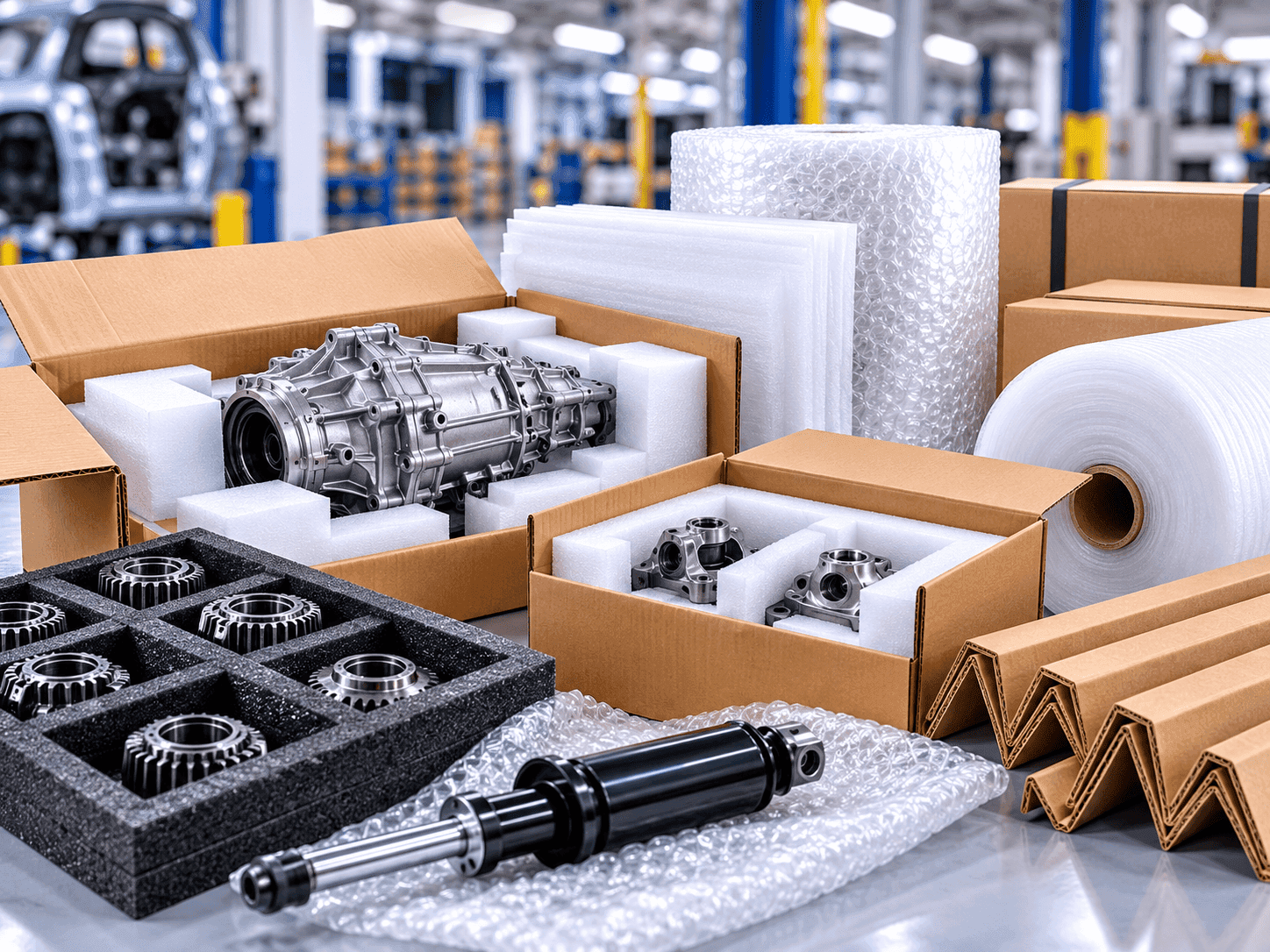
Engineering goods are usually heavy, often irregular, and expensive to replace if damaged. The packaging priority is support and stability: the part should not shift inside the pack, and the pack should not collapse under the load.
Heavy-duty boxes, custom dimensions and die-cut formats for irregular and over-sized parts.
Foam sheets and fitments cushion machined surfaces and absorb impact.
Edge protectors, strapping and VCI materials handle sharp corners, load securing and corrosion.
Poly bags and films keep parts dust-free during storage and between operations.
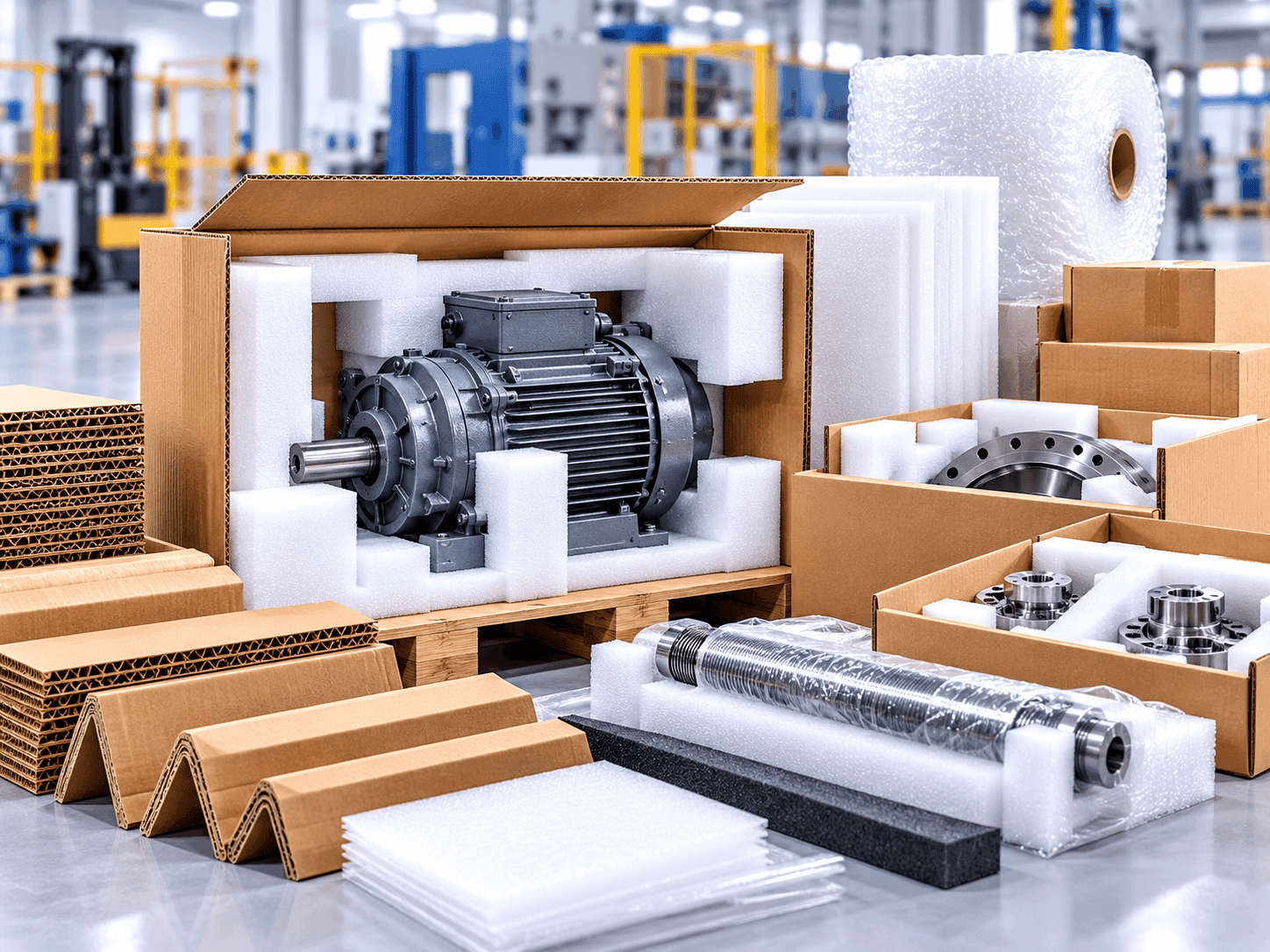
Electronic items combine two risks: physical damage from impact, and damage that cannot be seen at all — static discharge and dust. Packaging needs to address both while keeping the unit presentable on arrival.
ESD and anti-static bags address static sensitivity, while tapes and heat-sealing bags close packs cleanly.
Foam bags and fitments absorb shock and hold assemblies firmly in position.
Bubble wraps and pouches protect displays, casings and polished surfaces.
Printed corrugated boxes with partitions give finished units a presentable outer pack.
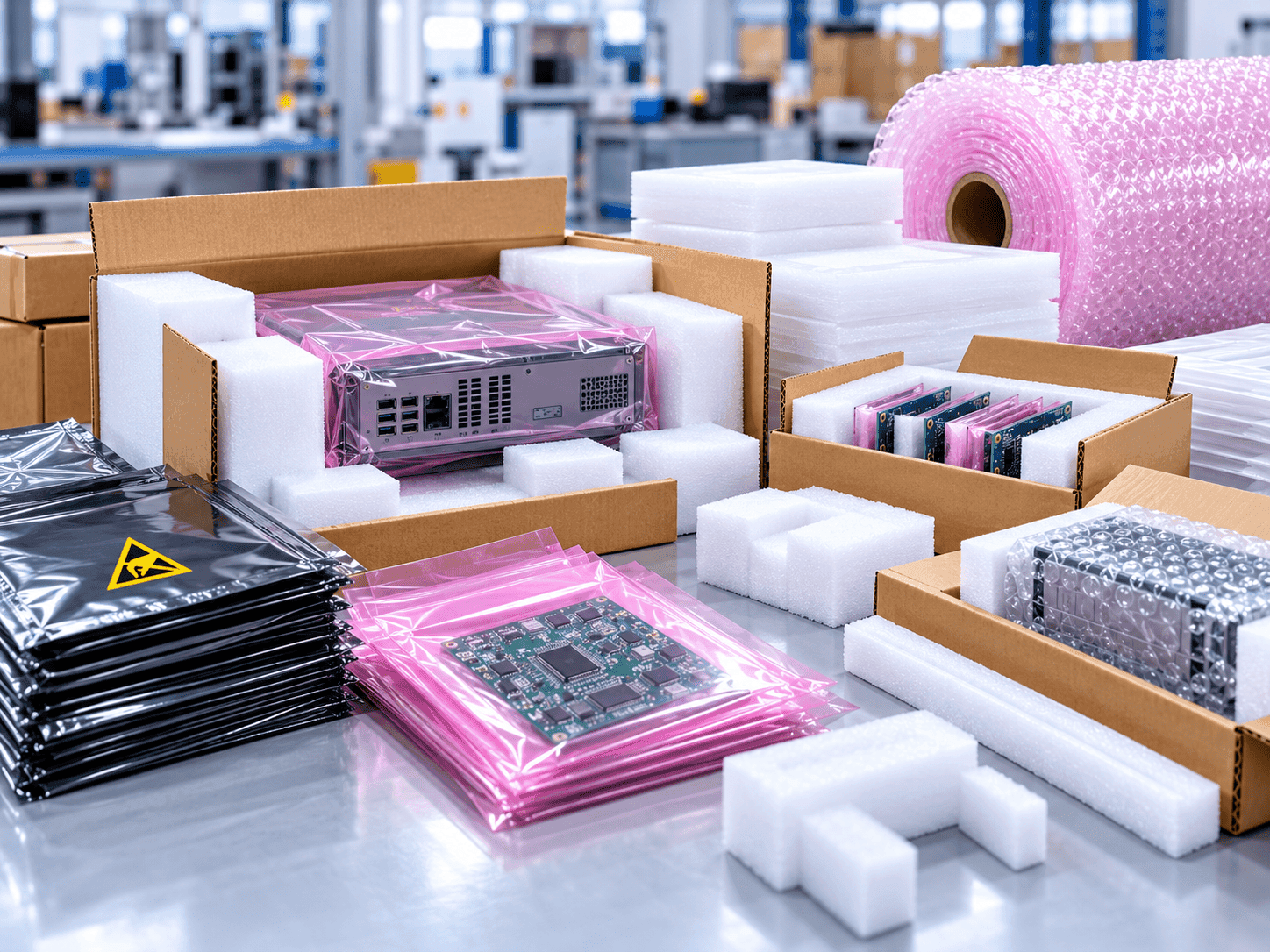
Pharma requirements are shaped by cleanliness and consistency. Packing materials should not shed dust, should keep items sealed and should arrive to the same specification every time the packing line runs.
Foam sheets and pouches protect fragile glass and equipment surfaces.
Poly bags and films keep packs sealed and dust-free in storage areas.
Clean corrugated boxes with dividers keep items organised and presentable.
Heat-sealing bags and tapes complete sealed, tidy packing formats.

FMCG lines run at volume and cannot afford packing material surprises. The priorities are clean handling, dimension consistency and steady supply, so a line keeps running without rework or rejects.
Poly bags, films and utility bags cover everyday packing and hygiene needs.
Printed corrugated cartons support distribution, stacking and branding.
BOPP tapes and strapping keep cartons closed and pallets stable.
Foam inserts stabilise glass, jar and bottle formats during transit.

E-commerce packing is driven by speed and uniformity. The same box has to protect very different products, handle sorting machinery and still be efficient to pack during peak volume.
3-ply and 5-ply boxes in multiple sizes cover the everyday shipping mix.
Bubble rolls, pouches and surface films protect contents inside the shipper.
Tapes, strapping and edge protectors close and stabilise parcels quickly.
Poly bags keep products clean and allow packing before the outer box is closed.

Industry names describe typical risk patterns; the actual packaging is always built around the specific product, the way it is handled and the route it travels.
From packing station to stacking, storage, transit and unpacking — each stage has its own risk.
Primary protection, outer packaging and accessories are chosen together, not separately.
Dimensions, ply or thickness, printing and packing format are agreed before supply.
Regular requirements are scheduled so material arrives before the line runs out.
We will suggest the material set that fits your handling, storage and dispatch pattern.
Pan-India Supply & Dispatch
Bulk supply across Pan India with reliable dispatch logistics.